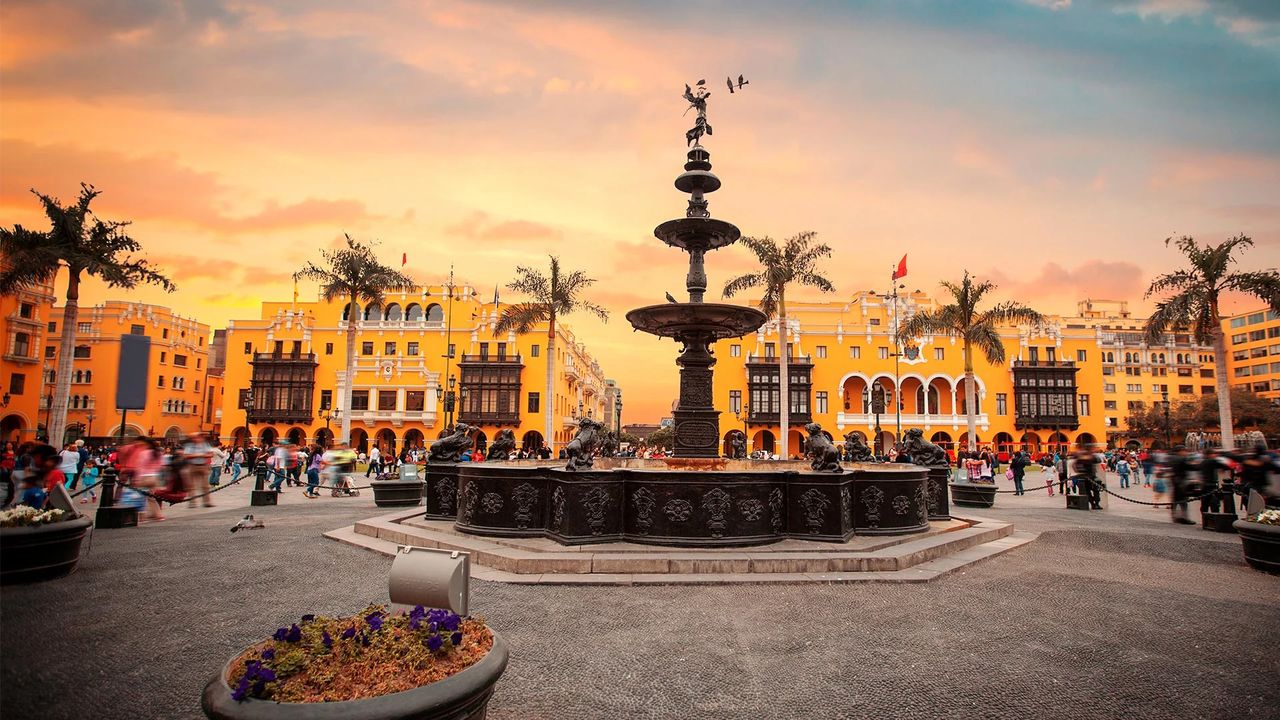
Erasmus and Exchange in Lima 2027 (26/27 · 27/28): Arrival, Neighbourhoods by University, Paperwork and WhatsApp Group
Arrival guide for Erasmus and exchange students in Lima in 2027: SIM and phone registration, soles, immigration, insurance, where to live by university (PUCP, Pacífico, U. de Lima, UPC, San Marcos), getting around, and what Cusco and Machu Picchu cost. With the Lima 2027 WhatsApp group.
If you're heading to Lima on exchange in 2027, your first week comes down to five things: a Peruvian SIM (and registering your phone if you bought it outside Peru, or it can get blocked), soles in cash from an exchange office or ATM, whatever immigration step your university tells you to file with Migraciones, international health insurance, and a neighbourhood picked around your campus. That last one is where most people get it wrong: PUCP is in San Miguel, Universidad del Pacífico in Jesús María, Universidad de Lima in Surco, and UPC has four campuses. For everything else there's the <strong>Erasmus & Exchange Lima 2027</strong> WhatsApp group, covering both intakes of the year: March arrivals (26/27 academic year) and August arrivals (27/28).
The group is an independent community run by Tuki; it is not affiliated with the European Commission or the Erasmus+ programme. Joining is free and new members are approved first. If you'd rather see the page before joining: <a href="https://tuki.cl/erasmus/grupos/peru/lima">tuki.cl/erasmus/grupos/peru/lima</a>.
In Lima you choose the neighbourhood by campus, not by photos: with traffic, 10 kilometres can take an hour.
Your first week in Lima: SIM, soles, immigration and insurance
SIM card and phone
Prepaid SIMs come from Claro, Movistar, Entel and Bitel, sold in their stores with your passport. The part almost nobody mentions: since 2024, if you put a Peruvian SIM in a phone bought abroad, the carrier has to register the device (OSIPTEL's RENTESEG whitelist). You do it at the carrier's store with the phone and your passport; they check the IMEI (dial *#06# to see it) and you sign a statement that it's for personal use. It's free and doesn't tie you to a plan. If you only use roaming or an eSIM from home, you don't need it.
Soles, exchange and cards
The currency is the sol (S/). To change euros or dollars, the exchange offices on Larco, José Pardo and Benavides avenues in Miraflores give you a receipt and let you check the notes. In Parque Kennedy there are street changers licensed by the municipality, wearing a vest and ID: fine for small amounts, counting the money in front of them. At ATMs, the fee for foreign cards depends on the bank; if the machine offers to do the conversion, choose to be charged in soles. Cards are accepted in most places in Miraflores, Barranco and San Isidro; you'll need cash for markets, buses and trips outside Lima.
Immigration: student status and the carné de extranjería
Peru has two immigration statuses for studying: <strong>temporary student status</strong> (calidad migratoria temporal por formación), meant for short courses, exchanges and internships, and <strong>resident student status</strong> (residente por formación), for studies of a year or more, which then lets you get the foreigner ID card (carné de extranjería). Both are requested through the online agency of Peru's immigration authority, Superintendencia Nacional de Migraciones (agenciavirtual.migraciones.gob.pe), with your passport, the university's acceptance letter and a clean criminal record; the fee is paid via Págalo.pe or at Banco de la Nación. Which one applies to you, whether you can enter as a tourist and switch later, and how far ahead to apply depend on your nationality and programme length: ask your host university's international office before you book the flight. The official information is on gob.pe, under Migraciones.
Health insurance
PUCP and Universidad de Lima require international health insurance to complete exchange enrolment, and your home university will usually ask for it too. Check two things in the policy: that it covers the whole semester, including trips before or after classes, and that it doesn't exclude high-altitude activities, because Cusco sits at 3,400 metres and Rainbow Mountain goes above 5,000. Private clinics in Miraflores and San Isidro see foreign patients; usually you pay and then claim the refund under your policy.
- Prepaid SIM with your passport (Claro, Movistar, Entel or Bitel), plus phone registration if it was bought abroad.
- Soles in cash from an exchange office; card for everything else.
- Immigration step confirmed with your host university's international office.
- International health insurance covering the full stay and high-altitude activities.
- A copy of your passport on your phone and one on paper; keep the original at home.
Where to live in Lima by university
Lima is big and traffic matters more than distance. So start with your campus, then look at neighbourhoods. This is what's close to each of the universities with the most exchange students:
- PUCP — San Miguel, on Avenida Universitaria: San Miguel, Pueblo Libre, Magdalena del Mar and Jesús María. Miraflores works, but the commute is longer.
- Universidad del Pacífico — Jesús María: Jesús María, Lince, San Isidro, Magdalena and Pueblo Libre. There's a direct bus from Miraflores; the university itself puts it at about 35 minutes without traffic.
- Universidad de Lima — Surco, on Javier Prado Este: Surco and San Borja. You can commute from Miraflores or Barranco, but Javier Prado jams at rush hour.
- UPC — four campuses: Monterrico (Surco), San Isidro, San Miguel and Villa (Chorrillos). Confirm where your classes are before signing a lease.
- San Marcos — Ciudad Universitaria, in central Lima (Universitaria and Venezuela avenues): Pueblo Libre, Jesús María and San Miguel.
What each neighbourhood is like
<strong>Miraflores</strong> is where most foreigners live: clifftop boardwalk over the ocean, the widest choice of furnished flats and the highest rents. <strong>Barranco</strong>, next door, is the neighbourhood for bars, galleries and nightlife; it tends to be a bit cheaper than Miraflores and louder at weekends. <strong>San Isidro</strong> is the business district: quiet, leafy and well connected to Universidad del Pacífico and UPC's San Isidro campus. <strong>Jesús María</strong> and <strong>Pueblo Libre</strong> are residential, cheaper and close to PUCP, Pacífico and San Marcos; there's less nightlife, but Miraflores and Barranco are one ride-hailing trip away.
As a reference, Universidad del Pacífico's international office quotes US$250–350 a month per person in student houses and US$280–350 in a shared flat. Prices move with the neighbourhood and the season. Two rules that save trouble: don't transfer money for a room you haven't seen (in person, or on a video call with someone you trust), and ask for a contract or receipt. In the 2027 group people share rooms and team up on flats with others from the same intake.
Getting around Lima: Metropolitano, apps and basic safety
The <strong>Metropolitano</strong> is the rapid bus that crosses Lima north to south on a dedicated lane. In Miraflores it stops at Ricardo Palma and Benavides; in Barranco, at Plaza de Flores, Balta and Bulevar. You pay with a rechargeable card bought and topped up at the stations; it doesn't run overnight. The <strong>complementary corridors</strong> (buses with fixed stops, such as the Red corridor along Javier Prado) reach several campuses. Metro <strong>Line 1</strong> links the south and east of the city and is of little use for student neighbourhoods; <strong>Line 2</strong> runs a first stretch in Ate and Santa Anita. In 2026 Lima started unifying payment with an interoperable card (TIT): ask at the station which card works when you arrive. Traditional buses and combis are cheap and cash-only; Google Maps or Moovit help with routes.
For taxis, use apps (Uber, Cabify, DiDi or InDrive), especially at night and from Jorge Chávez airport in Callao. Street taxis have no meter: if you take one, agree the fare before getting in.
- A phone in your hand on the street is the most common thing to get stolen: use it indoors or with your back to a wall.
- In a car, keep the window up and the phone out of sight from the street.
- Withdraw cash in daylight, at ATMs inside banks or shopping centres.
- At night, go home by app even for a few blocks.
- Carry a copy of your passport and leave the original at home.
- Miraflores, Barranco and San Isidro are the calmest areas, but opportunistic theft happens there too.
Trips from Lima: Cusco and Machu Picchu first
The trip nearly the whole intake does is Cusco and Machu Picchu. Lima to Cusco is a 1 h 15 to 1 h 30 flight with LATAM, Sky or JetSMART; by bus it's almost a full day. Cusco is at 3,400 metres: day one is for acclimatising, not trekking. Tuki's packs from Cusco cost <strong>CLP $110,000 to $270,000</strong> per person (≈US$115–280). The shortest pack that includes Machu Picchu is <strong>Cusco Icons 3d, at CLP $220,000</strong> (≈US$230). What none of them include: the flight to Cusco, your nights in Cusco, the entry fees paid on site (about 25 soles at Rainbow Mountain, the Tourist Ticket in the Sacred Valley) and the bus from Aguas Calientes up to Machu Picchu, because you walk up and down. Seasonal prices, charged in Chilean pesos; dollar figures are a reference at about 960 CLP per USD. The checkout is the source of truth.
- Cusco Icons 3d — CLP $220,000 (≈US$230) — Rainbow Mountain + Machu Picchu via Hidroeléctrica, a night in Aguas Calientes, Machu Picchu entry and 4 meals.
- Machu Picchu by car 2D/1N — CLP $160,000 (≈US$165) — van to Hidroeléctrica, hostel in Aguas Calientes, 3 meals; entry is included only if you book 2 months ahead.
- Cusco Classics 4d — CLP $250,000 (≈US$260) — Icons + Sacred Valley (Chinchero, Moray, Maras, Ollantaytambo and Pisac); Tourist Ticket and Maras paid separately.
- Cusco Intense 5d — CLP $270,000 (≈US$280) — Classics + Humantay Lake; 8 meals; Machu Picchu entry with 2 months' notice.
- Cusco 3 Full Days — CLP $110,000 (≈US$115) — Sacred Valley, Humantay and Vinicunca, no Machu Picchu.
Experiencia: cusco-stars-by-tuki-montana-colores-machu-picchu — Desde $220.000
Experiencia: machu-picchu-2-dias-hidroelectrica — Desde $160.000
Experiencia: cusco-completo-by-tuki-city-tour-montana-de-col — Desde $250.000
Experiencia: cusco-para-valientes-by-tuki-5-dias — Desde $270.000
Experiencia: cusco-3-full-days-by-tuki — Desde $110.000
To compare day by day, see <a href="https://tuki.cl/guias/cusco-5-day-intense-what-each-day-includes-2026">Cusco Intense in 5 days</a>, <a href="https://tuki.cl/guias/cusco-machu-picchu-tours-prices-2026">Cusco and Machu Picchu tours with prices</a> and <a href="https://tuki.cl/guias/how-to-get-to-cusco-and-get-around-2026">how to get to Cusco and get around</a>.
Destino: machu-picchu
Lake Titicaca from Cusco
Titicaca fits well after Cusco. The full day to the Uros floating islands and Taquile costs <strong>CLP $53,764</strong> (≈US$55) and includes the overnight Cusco–Puno bus both ways (about 8 hours each), the boat, island entry fees and lunch on Taquile. Breakfast and dinner are on you.
Experiencia: lago-titicaca-uros-taquile-full-day — Desde $53.764
Paracas and Huacachina: the weekend without a flight
South of Lima are the Ballestas Islands (Paracas) and the Huacachina oasis (Ica), with dune buggies and sandboarding. It's a long day trip from Lima. The full day with pickup in Miraflores costs <strong>CLP $95,400</strong> (≈US$100) and includes transport, guide, speedboat to the Ballestas, the pisco route, buggies and entry fees; food is extra. There's also a <strong>CLP $68,267</strong> (≈US$70) option with the boat, buggy, sandboarding and a bilingual guide, but no pickup from your place and no lunch, plus a 20-sol local tax paid on site. That second one is priced in dollars at source, so the peso amount moves with the exchange rate.
Experiencia: paracas-y-huacachina-1d — Desde $95.400
Experiencia: lim-01-full-day-tour-in-paracas-ica-and-hua-820491 — Desde $69.971
What about Uyuni? It's far from Lima: you get there via Puno and La Paz, or down through Chile. The Uyuni tour Tuki sells leaves from San Pedro de Atacama: 4 days and 3 nights for CLP $270,000 (≈US$280), with 4x4 transport, meals and lodging; Bolivian park fees are paid separately, in cash. Details in the <a href="https://tuki.cl/guias/uyuni-salt-flats-tour-options-prices">Uyuni salt flats tour guide</a>.
Erasmus and exchange community in Lima 2027
The Lima 2027 group is for the practical stuff: meeting your intake before you land, sharing flats, sorting out paperwork questions and putting together groups to travel. There's also a Peru 2027 group for people studying in other Peruvian cities. Tuki's group trips and activities are announced in the group and on <a href="https://tuki.cl/erasmus">tuki.cl/erasmus</a>, where you can sign up for the 2027 intake. Local nights out in Lima will only be announced if someone from the community is organising them in the city; the trips can be booked now.
Independent community run by Tuki. Not affiliated with the European Commission or the Erasmus+ programme. Group page: <a href="https://tuki.cl/erasmus/grupos/peru/lima">tuki.cl/erasmus/grupos/peru/lima</a>.
Frequently asked questions
Is there an Erasmus or exchange student WhatsApp group for Lima in 2027?
Yes: Erasmus & Exchange Lima 2027, run by Tuki for students arriving in Lima in March (26/27 academic year) or August (27/28). It's free, new members are approved first, and you join from tuki.cl/erasmus/grupos/peru/lima. It's an independent community, not affiliated with the European Commission or Erasmus+.
Which neighbourhood should I live in as an exchange student in Lima?
It depends on your campus. For PUCP (San Miguel): San Miguel, Pueblo Libre or Magdalena. For Universidad del Pacífico: Jesús María, Lince or San Isidro. For Universidad de Lima (Surco): Surco or San Borja. At UPC, first confirm which of its four campuses you'll attend. Miraflores and Barranco are where the social life and most foreigners are, but they cost more and can be far from your university.
Do I need a student visa for one exchange semester in Peru?
It depends on your nationality and programme. Migraciones offers temporary student status (short studies and exchanges) and resident student status (a year or more, with a foreigner ID card). Both are filed through Migraciones' online agency with your university's letter. Your host university's international office will tell you which applies and whether you can enter as a tourist and switch later.
Which SIM card should I get in Peru, and do I have to register my phone?
Claro, Movistar, Entel and Bitel sell prepaid SIMs with your passport. If your phone was bought outside Peru and you use a Peruvian SIM, the carrier must register it on OSIPTEL's whitelist: go to the store with the phone and your passport, they check the IMEI (*#06#) and you sign a statement. It's free. With roaming or a foreign eSIM you don't need it.
How do students get around Lima?
The Metropolitano (north–south rapid bus with stops in Miraflores and Barranco) and the complementary bus corridors cover many campus commutes, using a rechargeable card. For the rest, apps like Uber, Cabify, DiDi or InDrive. Street taxis have no meter: agree the fare before getting in.
Is Lima safe for exchange students?
Miraflores, Barranco and San Isidro are the calmest areas, but phone snatching on the street and through car windows is common across the city. Don't walk with your phone in your hand, withdraw cash in daylight at ATMs inside banks or malls, and go home by app at night.
How much does it cost to go to Machu Picchu from Lima?
Add the tour to the Lima–Cusco flight (1 h 15 to 1 h 30). On Tuki, Machu Picchu via Hidroeléctrica over 2 days costs CLP $160,000 (≈US$165) and the Cusco Icons 3d pack, with Rainbow Mountain and Machu Picchu entry, CLP $220,000 (≈US$230), as of September 2026; the checkout is the source of truth. Neither includes lodging in Cusco or entry fees paid on site.
What weekend trips can you do from Lima?
Without flying: Paracas and Huacachina in one long day (full day with Miraflores pickup at CLP $95,400, ≈US$100). With a flight: Cusco and Machu Picchu in 3 to 5 days (packs from CLP $110,000 to $270,000) and Lake Titicaca from Cusco (CLP $53,764 with an overnight bus). Uyuni is far from Lima; Tuki sells it from San Pedro de Atacama.