Erasmus and exchange in Montevideo 2027: arrival guide, neighbourhoods, paperwork and WhatsApp group
Practical guide for Erasmus and exchange students in Montevideo 2027: tourist entry and extension, mandatory insurance, SIM, STM bus card, neighbourhoods by university (Udelar, ORT, UM, Católica), safety, trips and the cohort WhatsApp group.
If you're heading to Montevideo on Erasmus or exchange in 2027, the first week is manageable: you enter as a tourist with your passport (90 days, extendable by 90 more at Migración), bring health insurance that covers your whole stay, get an STM card for the bus and pick a neighbourhood based on where your faculty is. The part few people mention: Udelar has no student housing of its own and many landlords ask for a rental guarantee, so finding a place is what takes longest. That's what the 2027 cohort WhatsApp group is for. It brings together people arriving in March (26/27 academic year) and in August (27/28).
Erasmus & Exchange Montevideo 2027
Passport, insurance and STM card in week one. The flat can wait, and don't pay for anything you haven't seen.
Your first week in Montevideo: what to sort out
- Entry: a valid passport. Most European and American nationalities don't need a student visa; you enter as a tourist.
- Health, accident and repatriation insurance for your whole stay (Udelar requires it before you can enrol in courses).
- A Uruguayan SIM or eSIM (Antel, Claro or Movistar), registered with your passport.
- STM bus card: free with your passport.
- Put day 90 after your arrival in your calendar so you can request the extension in time.
- A foreign debit or credit card and some cash in Uruguayan pesos.
Immigration: 90 days, extension and residency
Most foreigners don't need a visa: you enter as a tourist and get 90 days. If your semester runs longer, you request a temporary stay extension (prórroga de permanencia temporaria) at the Dirección Nacional de Migración in Ciudad Vieja for up to 90 more days; the official procedure asks you to file at least 15 days before your permit expires. Note that if you leave the country (a weekend in Buenos Aires, for example) and come back, the 90 days start again from your new entry date.
If you're staying beyond a long semester or a full year, you need temporary legal residency: you start it online at gub.uy, it lasts between 6 months and 2 years, and it asks for a criminal record certificate, vaccination records and a health card, plus proof of enrolment and funds. Once it's approved you can get a Uruguayan ID card (cédula). Rules change, so check with your international office and at gub.uy/migracion before you fly.
Health insurance
Udelar requires insurance covering healthcare, accidents and repatriation from the day you enter Uruguay to the day you leave, and you have to send the policy before your mobility starts. ORT, Universidad de Montevideo and Universidad Católica set their own requirements, but the logic is the same: no valid insurance, no enrolment. If you extend your stay, extend the policy too.
SIM card, money and payments
There are three carriers: Antel (state-owned), Claro and Movistar. Prepaid SIMs are sold in carrier shops and kiosks and are registered with your passport. A travel eSIM works if you want to land already connected.
The currency is the Uruguayan peso. Cards are accepted almost everywhere, and some rentals are listed in US dollars. Uruguay offers VAT benefits to non-residents paying with a foreign card: at hotels all year and, in recent seasons, at restaurants between November and April. The restaurant scheme is renewed season by season, so check gub.uy to see if it still applies when you arrive.
STM card
The standard STM card is free the first time. You get it with your passport at STM service points (for example at Tres Cruces or the Río Branco terminal) and at many Abitab and Redpagos outlets. Top-ups start at 100 Uruguayan pesos. It lets you take 1- or 2-hour tickets that combine buses: tell the driver which ticket you want before you tap.
The student card, with a much cheaper fare, isn't something you request yourself: your faculty has to register you in the system (at Udelar, the Bedelía does it) and then you collect it at an STM office. Ask as soon as you're enrolled.
Where to live in Montevideo by university
Montevideo is flat and runs on buses, so the rule is simple: live one direct bus from your faculty and, if you can, near the rambla (the waterfront). These are the neighbourhoods where exchange students usually end up.
- Cordón: central and more affordable. Home to Udelar's Law Faculty and main building on 18 de Julio, close to ORT's Campus Centro (Cuareim).
- Parque Rodó: a park, bars and the rambla. Udelar's Engineering (FING) and Economics (FCEA) faculties are here.
- Pocitos: beach and rambla, residential towers, plenty of shops. Near ORT's Campus Pocitos (Bulevar España). Pricier.
- Punta Carretas: quiet and by the sea, between Pocitos and Parque Rodó. Among the most expensive areas to rent.
- Ciudad Vieja: the old town, with the port and the Buquebus ferry terminal. It empties out at night; read the safety section before choosing it.
- Tres Cruces and La Blanqueada: handy for Universidad Católica (Avenida 8 de Octubre) and the main bus terminal.
- Parque Batlle: main campus of Universidad de Montevideo (Prudencio de Pena). Some of its faculties are at the LATU Innovation Park.
Udelar has no student residences, so every student finds their own place. The usual options are private student residences, shared houses and short-term rentals. A standard lease almost always asks for a guarantee plus one or two months' deposit, which is hard to get when you've just arrived. That's why many students book a temporary place for a week or two and look for a flat once they're in the city. Don't pay for or book anything you haven't seen or that someone you trust hasn't checked; rooms and people looking for flatmates come up in the group.
Getting around and staying safe
There's no metro: the city runs on STM buses, and ride-hailing apps work in Montevideo for getting home at night. The rambla is walkable and bikeable and links Ciudad Vieja, Parque Rodó, Punta Carretas and Pocitos. To leave the city, almost every long-distance bus departs from the Tres Cruces terminal.
On safety, facts rather than alarm: the US keeps Uruguay at Level 2 in its travel advisory (exercise increased caution, renewed in July 2026) because of robberies, and notes a rise in crime in Ciudad Vieja. In practice: keep your phone away on the street and off café tables, watch for motorbikes approaching in pairs, and take an app ride or taxi home late instead of walking empty streets.
Trips from Montevideo: weekends and the big semester trip
Close by and easy to organise: Colonia del Sacramento is a few hours by bus from Tres Cruces; Punta del Este, a couple of hours along the coast; and Cabo Polonio has no car access, so you go in on 4x4 trucks from the access terminal on Ruta 10. Buenos Aires is across the river: a direct ferry from Montevideo port, or bus plus ferry via Colonia. Tuki doesn't operate in Uruguay yet, so these getaways are on you.
What we do run are the longer trips the cohort takes during breaks. Prices below are per person, in Chilean pesos (CLP), as shown in checkout today. They're seasonal and can shift with exchange rates: the checkout price is final.
Brazil: Rio de Janeiro and Ilha Grande
The summer trip that comes up most from Montevideo. From Rio, the shared transfer with the boat to Vila do Abraão costs CLP 35,386 with hotel pickup. On the island, the full boat trip around Ilha Grande costs CLP 47,771.
Experiencia: transfer-rio-de-janeiro-ilha-grande-con-barco-2 — Desde $35.563
Experiencia: vuelta-completa-a-ilha-grande-desde-abraao — Desde $47.771
In Rio itself: the Rocinha favela tour with local guides (CLP 30,500, pickup in Copacabana, Ipanema or Leblon) and a match at the Maracanã with transport and ticket included (CLP 52,902).
Experiencia: tour-favela-rocinha-rio-de-janeiro — Desde $30.500
Experiencia: rio-partido-en-el-maracana-con-traslado-privado — Desde $52.902
Iguazú Falls
A full day on both the Argentine and Brazilian sides, with pickup in Foz do Iguaçu or Puerto Iguazú: CLP 42,000. Entry to both national parks is paid separately.
Experiencia: cataratas-del-iguazu-tour-de-dia-completo-por-l — Desde $42.000
The long trip: Uyuni and Patagonia
The Uyuni Salt Flats 4D/3N trip leaves from and returns to San Pedro de Atacama by 4x4, with meals and 3 nights included: CLP 270,000. Flights to Calama and the Bolivian park fees (cash only) aren't included. In Chilean Patagonia, the Base Torres viewpoint trek in Torres del Paine leaves from Puerto Natales: CLP 90,000, park entry not included.
Experiencia: tour-salar-de-uyuni-4d3n-desde-san-pedro-de-ata-1 — Desde $270.000
Experiencia: tdp-trekking-base-torres-wcircuit — Desde $90.000
If Uyuni is on your list, the guide with every departure, price and what's left out is at https://tuki.cl/guias/uyuni-salt-flats-tour-options-prices.
Community: the Montevideo 2027 group
The Erasmus & Exchange Montevideo 2027 group is for Erasmus and exchange students arriving in 2027 at Udelar, ORT, Universidad de Montevideo, Universidad Católica or any other university. Use it to meet people before you land, share room leads, ask about paperwork and plan nights out and trips. It's free, new members go through approval, and numbers reported for spam are blocked across every group in the community. If you'll be travelling around the country, there's also a Uruguay 2027 group.
The group page is at https://tuki.cl/erasmus/grupos/uruguay/montevideo, and at https://tuki.cl/erasmus you can sign up to hear about the cohort's trips and activities.
Independent community run by Tuki. Not affiliated with the European Commission or the Erasmus+ programme.
Immigration, insurance and STM details from gub.uy, the Intendencia de Montevideo, Udelar and ORT (checked September 2026). Procedures change: check with your university and at gub.uy before you travel.
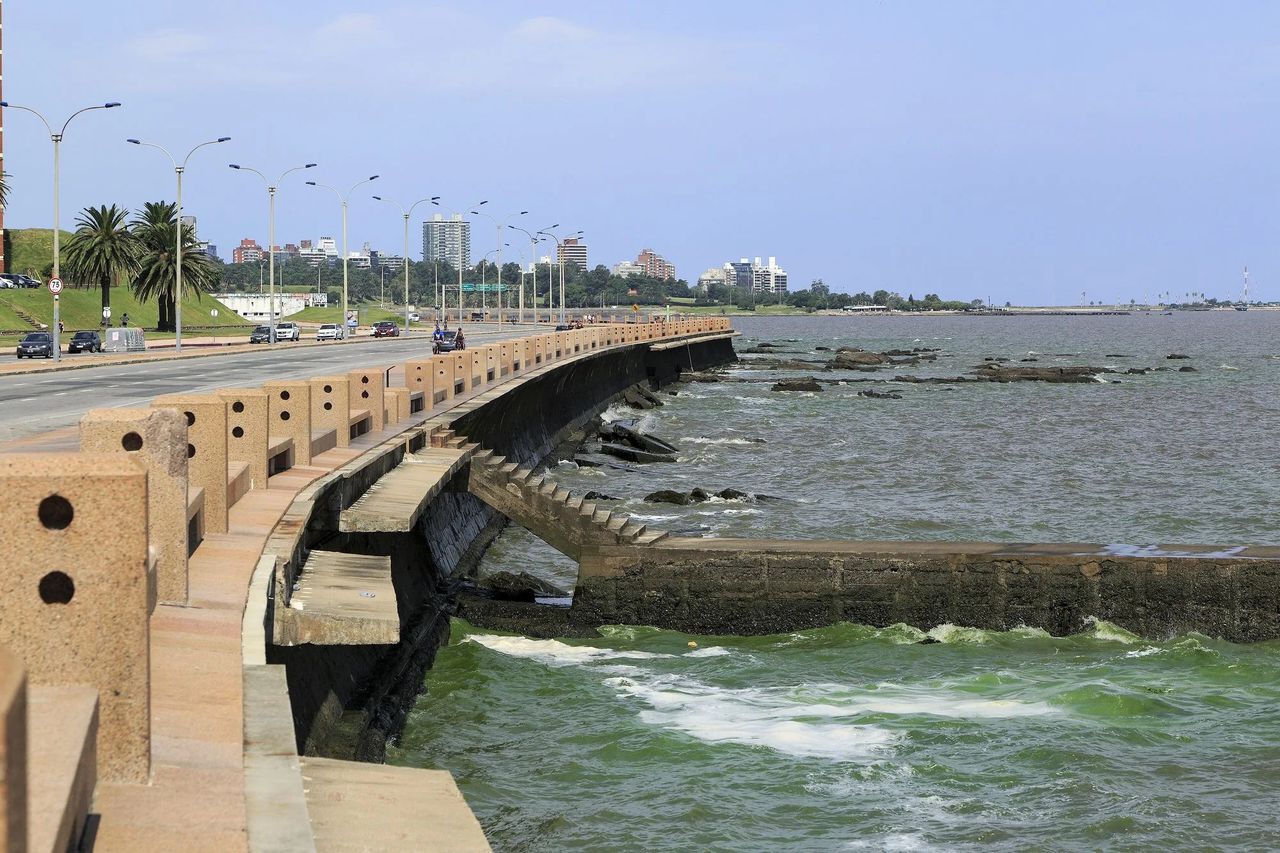
Cover photo: Falk2 / Wikimedia Commons, CC BY-SA 3.0 de.
Erasmus & Exchange Montevideo 2027
Frequently asked questions
Is there a WhatsApp group for Erasmus students in Montevideo in 2027?
Yes: the Erasmus & Exchange Montevideo 2027 group, run by Tuki. It covers students arriving in March (26/27 academic year) and in August (27/28). You join from tuki.cl/erasmus/grupos/uruguay/montevideo. It's free and new members go through approval.
Do I need a visa to study for a semester in Montevideo?
For most European and American nationalities, no: you enter as a tourist with your passport and get 90 days, extendable by up to 90 more at the Dirección Nacional de Migración. Longer stays require temporary residency. Confirm with the Uruguayan consulate and your university.
Is health insurance mandatory for an exchange in Uruguay?
At Udelar, yes: you need health, accident and repatriation insurance covering you from the day you enter to the day you leave, and you must send the policy before you start. Private universities have similar requirements.
How do I get an STM bus card as a foreigner?
The standard card is free with your passport at STM service points (Tres Cruces, Río Branco terminal) and at participating Abitab or Redpagos outlets. The student card goes through your faculty: it registers you in the system (at Udelar, the Bedelía) and you then collect the card at an STM office.
Which neighbourhood should I live in as an exchange student in Montevideo?
It depends on your faculty. Cordón is central and close to Law and ORT Centro; Parque Rodó is next to Engineering and Economics; Pocitos and Punta Carretas are pricier and right on the rambla; Tres Cruces is handy for Universidad Católica. A direct bus to class matters most.
Is it hard to rent in Montevideo without a guarantor?
Standard leases usually ask for a guarantee plus one or two months' deposit. That's why students go for private residences, shared houses or short-term rentals. Udelar has no student housing of its own.
What trips can I take from Montevideo during the semester?
Nearby: Colonia, Punta del Este, Cabo Polonio and Buenos Aires by ferry. Further: Rio de Janeiro and Ilha Grande, Iguazú, the Uyuni Salt Flats and Chilean Patagonia, which Tuki runs with prices shown at checkout.
Is the group an official Erasmus+ group?
No. It's an independent community run by Tuki (tuki.cl), not affiliated with the European Commission or the Erasmus+ programme.