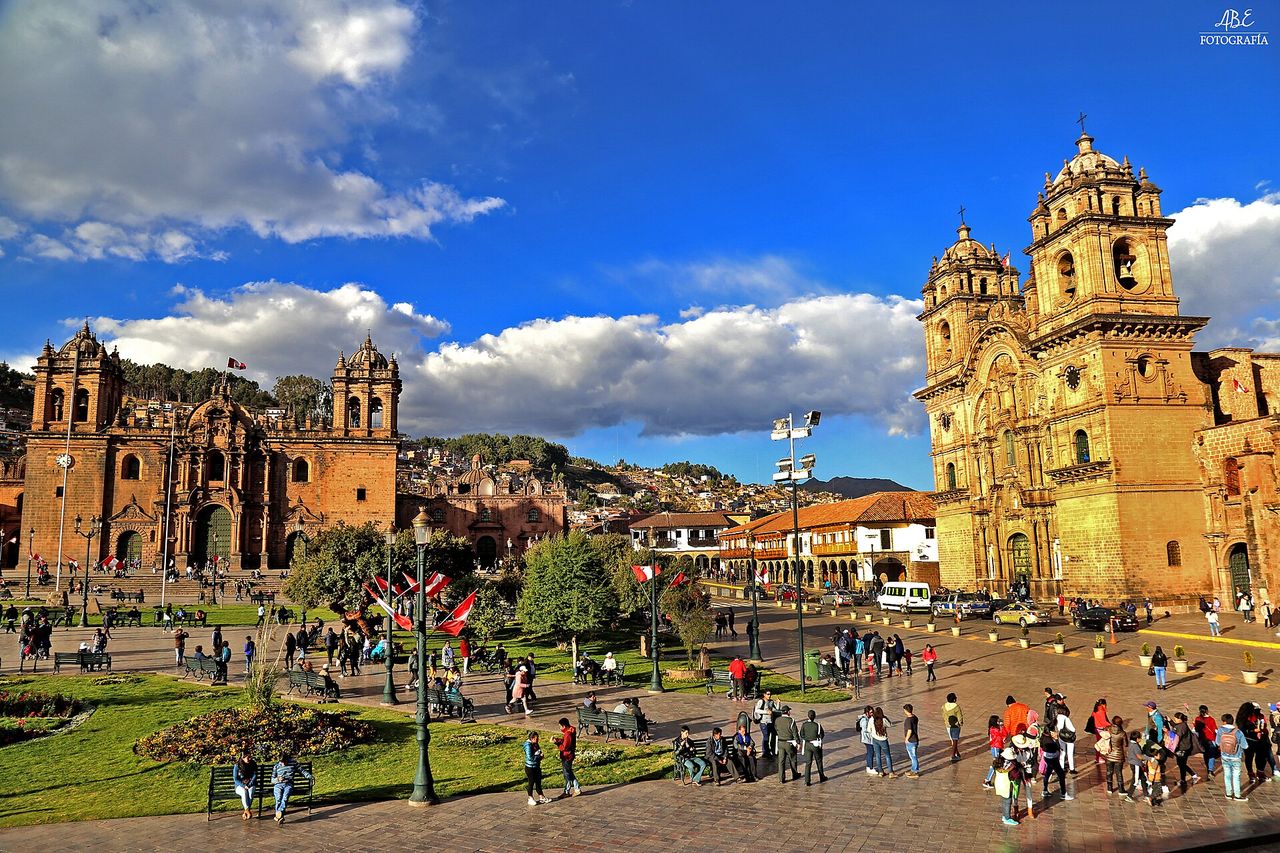
How to get to Cusco and get around once you're there: flights, the airport, taxis and how to reach Machu Picchu (2026)
Cusco has a nonstop from Santiago (LATAM, about 4 hours) and daily flights from Lima; the airport sits inside the city, 15-20 minutes from the centre. At 3,400 m your first day stays easy. Machu Picchu is reached by train (CLP $309,678) or via Hidroeléctrica in 2 days (CLP $160,000).
Seasonal prices: the checkout has the final word. The tours in this guide are booked on Tuki and charged in Chilean pesos (CLP); the final price is the one at checkout. Figures for flights, taxis, buses and Peruvian entry tickets are September 2026 market references in soles or US dollars, not fixed fares.
There are two ways into Cusco by air: the <strong>LATAM nonstop from Santiago</strong>, about 4 hours and several days a week, or a flight <strong>via Lima</strong>, which is how everyone else arrives, with LATAM, Sky or JetSMART covering the 1 hour 15 to 1 hour 30 hop from the capital. Alejandro Velasco Astete airport sits <strong>inside the city</strong>: 15 to 20 minutes by taxi to the Plaza de Armas, in the range of S/20 to S/25 if you take one from the terminal. What shapes the trip is altitude: Cusco is at <strong>3,400 metres</strong>, and day one is not for trekking or Machu Picchu. From Cusco there are two ways to the citadel: <strong>by train</strong>, there and back in a day, for <strong>CLP $309,678</strong> with train, uphill bus and guide, or <strong>via Hidroeléctrica over 2 days</strong>, for <strong>CLP $160,000</strong> with a van, one night in Aguas Calientes and three meals. The detail no listing shouts about: on both routes the Machu Picchu entry ticket is included <strong>only if you book at least 2 months ahead</strong>, and neither includes the bus down.
Land, sleep one night in Cusco, do the half-day city tour. Machu Picchu by train if you're short on time; via Hidroeléctrica if you have legs and two days. Nobody includes the bus down.
Machu Picchu by train, full day from Cusco — CLP $309,678
This is the whole transfer to Machu Picchu solved in one day: hotel pickup between 04:00 and 04:20, bus to Ollantaytambo station, the 06:10 train to Aguas Calientes, the bus up, a guided visit of about 2 and a half hours and free time. You return on the 18:20 train and reach Cusco around 22:00: roughly 18 hours door to door. It includes the briefing the day before, Cusco–Ollantaytambo transport both ways, return train tickets, the bus up, a bilingual guide and the Machu Picchu ticket if you book at least 2 months ahead. It does not include the bus down (about USD 12; on foot it's 40 minutes), the Huayna Picchu or Machu Picchu mountain add-ons, or meals. Booked by WhatsApp from the listing; the checkout charges in Chilean pesos.
Experiencia: machu-picchu-full-day-en-tren-desde-cusco — Desde $309.678
The 6 pieces of Cusco logistics, with a price or a reference
- Flight to Cusco — LATAM nonstop from Santiago about 4 hours, or via Lima (Santiago–Lima about 3 hours 50 plus Lima–Cusco 1 hour 15 to 1 hour 30; Sky and JetSMART only via Lima)
- Airport → centre — 15 to 20 minutes by taxi, S/20 to S/25 from the terminal, S/15 to S/20 on the street — fare agreed before you get in, no meter
- Cusco City Tour, half day — CLP $53,000 — transport, guide and pickup; Tourist Ticket and Qorikancha paid separately — the day-1 plan
- Sacred Valley full day — CLP $40,000 — transport, buffet lunch, guide and 5 sites; Sacred Valley Tourist Ticket (about USD 24) separate — the valley without a car
- Machu Picchu by train, full day — CLP $309,678 — train, bus up, guide and entry (2 months ahead); bus down and meals separate
- Machu Picchu via Hidroeléctrica, 2D/1N — CLP $160,000 — van, hostel, 3 meals, guide and entry (2 months ahead); both buses are walked
Flights: nonstop from Santiago or via Lima from anywhere
LATAM Perú runs the nonstop between Santiago and Cusco: about 4 hours in the air, several days a week, landing mid-afternoon. From anywhere else, and from Santiago when the nonstop doesn't fit, Lima is the hub: Santiago–Lima takes close to 3 hours 50, and Lima–Cusco 1 hour 15 to 1 hour 30 with LATAM, Sky or JetSMART, several times a day. Allow a 2 to 3 hour connection at Jorge Chávez and the Santiago trip comes to 8 to 10 hours. Two things to weigh when choosing times: Peru is on UTC-5 all year (one hour behind Chile in winter, two in summer), and morning Lima–Cusco flights are delayed less than afternoon ones, because Cusco's airport sits between hills and shuts when the weather turns. If you arrive off an overnight connection, don't book the Machu Picchu tour for the next day.
Lima–Cusco by bus: only if you have time to spare
It exists and it's comfortable, but it's 21 to 24 hours on the road. Cruz del Sur has several afternoon departures with lie-flat seats, with fares starting around S/185. The genuine upside is that you climb gradually from sea level and arrive better acclimatised; the cost is a full day each way. With a week or less, it doesn't pay off; with two weeks and a wish to stop in Nazca or Arequipa, it does.
The airport is inside the city: 15 to 20 minutes to the centre
Alejandro Velasco Astete is in the Wanchaq district, about 5 km from the Plaza de Armas: 15 minutes without traffic, 20 to 25 at rush hour. Outside arrivals there are taxi counters with a fixed fare to the centre, in the range of S/20 to S/25; the private car services with a driver holding a sign charge S/40 to S/60. One block towards the avenue, a street taxi costs S/15 to S/20. Cusco has no meters: the fare is agreed before you get in, in soles. Nearly every hostel and hotel offers a pickup for a similar amount, and for a night arrival that's the simplest option. Change only the taxi money at the airport: the rate there is worse than in town.
3,400 metres: why day one stays easy
Cusco sits at 3,400 metres and the plane drops you there in a few hours from sea level. Your body notices 6 to 24 hours later: headache, little appetite, light sleep, breathlessness on a staircase. It's normal and for most people it passes in a day or two if you don't push. That's why the order of the trip isn't negotiable: on day one you walk the centre slowly, eat light and sleep in Cusco. Machu Picchu is lower (2,430 m) and so is the Sacred Valley (2,800 to 2,900 m): after day one everything feels easier. High-altitude hikes like Humantay or Vinicunca go last, with two or three nights under your belt.
- Water: more than you think, starting on the plane
- Light food on day 1; no alcohol the first night
- Coca or muña tea helps, it doesn't cure; if you have a history, ask your doctor about acetazolamide before travelling
- Climb the San Blas lanes slowly; the centre is walkable, but uphill
- Day-1 activity: the half-day city tour, afternoon slot if you land at midday
- Machu Picchu and hikes from day 2 or 3, never the day you land
Cusco City Tour: Qorikancha and Sacsayhuamán, half day — CLP $53,000
This is the activity built for arrival day: about 4 hours by vehicle with short walks, morning or afternoon slot, with pickup at your accommodation. It enters Qorikancha and continues to Saqsayhuamán, Qenqo, Puka Pukara and Tambomachay, the four ruins on the heights above town, with a short optional stop at a textile centre. It includes transport, a guide in Spanish and English, a first-aid kit and pickup. Entry tickets are separate: the Cusco Tourist Ticket (Circuit I) for the four ruins and the Qorikancha temple ticket, paid at the door.
Experiencia: city-tour-cusco — Desde $53.000
Getting around Cusco: on foot, street taxis and apps
The historic centre is a walking city: Plaza de Armas, San Blas, San Pedro market and Avenida El Sol are 10 to 15 minutes from each other, with the caveat that San Blas is uphill and at 3,400 metres you feel it. For everything else, the street taxi is the city's transport: you flag one down and settle the fare before getting in, in the range of S/8 to S/15 for a ride within town; pick cars with a company logo and a number on the door, and at night ask your hostel to call one. Apps work too: inDrive is the most used in Cusco (you propose the fare) and Uber runs with fewer cars; both are handy for the airport or a neighbourhood outside the centre, with the price visible before you set off. For tours you don't need a taxi: every tour in this guide picks you up at your accommodation within the urban area and confirms the time by WhatsApp.
The Sacred Valley without a car: full-day tour — CLP $40,000
You can reach the Sacred Valley on your own by colectivo: the minivans to Ollantaytambo leave from Calle Pavitos when full, charge in the range of S/10 to S/20 and take 1 hour 45. But to see Chinchero, Moray, the Maras salt pans, Ollantaytambo and Pisac in one day, there's no way to string them together without a car: Maras and Moray sit off the main road. The full-day tour solves it for CLP $40,000 with pickup between 06:30 and 07:00, return transport, buffet lunch in Urubamba with vegan options, a bilingual guide, five archaeological sites, two community workshops and oxygen on board. You're back in Cusco between 19:00 and 19:30. Paid separately: the Sacred Valley Tourist Ticket, about USD 24 on site, plus breakfast and dinner. It's a sound day 2: you're lower than in Cusco and you walk little.
Experiencia: valle-sagrado-full-day-desde-cusco — Desde $40.000
How to reach Machu Picchu: train from Ollantaytambo or the Hidroeléctrica route
No road reaches Machu Picchu. The citadel is visited from Aguas Calientes (Machu Picchu Pueblo), and you get to Aguas Calientes by train or on foot along the tracks from Hidroeléctrica. Trains are run by PeruRail and Inca Rail. The station almost every tour uses is <strong>Ollantaytambo</strong>, 1 hour 45 by road from Cusco, and from there the train takes another 1 hour 45. <strong>Poroy</strong> station, 20 minutes from Cusco, offers a longer (about 3 hours 30) and pricier ride and only operates from May to December: from January to April, services from Cusco run as bus plus train with a change at Pachar. In the dry season (May to September) morning trains sell out weeks ahead: book the train full day before the flight.
The <strong>Hidroeléctrica</strong> route crosses the mountains overland: a van from Cusco through Ollantaytambo and the Abra Málaga pass (4,316 m) to Santa María, Santa Teresa and the hydroelectric plant, about 6 to 7 hours with stops. From there it's about 10 km on foot beside the tracks and the river, mostly flat, 2 and a half to 3 hours to Aguas Calientes. It needs no train and no advance seat, which is why it costs half as much. What it costs you is time (two days instead of one), the 04:00 start on day 2 to climb on foot, and a long van ride back. In the rainy months (January to March) the road to Santa Teresa can close after landslides: ask before booking.
Machu Picchu via Hidroeléctrica, 2 days — CLP $160,000
The budget version, over two days. Day 1: pickup between 07:30 and 08:00, minivan with stops in Ollantaytambo and at Abra Málaga, lunch at Hidroeléctrica, a 2 and a half hour walk along the tracks, dinner and a hostel night in Aguas Calientes. Day 2: out at 04:00 and up to the citadel on foot (about 40 minutes of stairs), a 2 hour guided visit, free time, back down around 11:00, lunch and the van to Cusco. It includes Cusco–Hidroeléctrica transport both ways, one hostel night, one breakfast, one lunch and one dinner, a bilingual guide, taxes and the entry ticket if you book 2 months ahead. It does not include either bus between Aguas Calientes and the citadel (both legs are walked), breakfast on day 1, or lunch and dinner on day 2. Grippy shoes, a rain layer and a headlamp are a requirement, not a suggestion.
Experiencia: machu-picchu-2-dias-hidroelectrica — Desde $160.000
What you pay separately
- Machu Picchu by train: bus down from Machu Picchu to Aguas Calientes (about USD 12; 40 minutes on foot), Huayna Picchu mountain ticket, Machu Picchu mountain ticket (both need advance booking) and meals
- Machu Picchu via Hidroeléctrica: bus up and bus down between Aguas Calientes and the citadel (both legs are walked), breakfast on day 1, lunch and dinner on day 2
- Cusco City Tour: Cusco Tourist Ticket Circuit I (Saqsayhuamán, Qenqo, Puka Pukara and Tambomachay), Qorikancha temple ticket and tips
- Sacred Valley: Sacred Valley Tourist Ticket (about USD 24 for the 5 sites, paid on site), breakfast and dinner
- Cusco Intense 5 days: Sacred Valley Tourist Ticket (USD 24), Humantay and Vinicunca park entries (25 soles each, paid on site), optional horses, Aguas Calientes–Machu Picchu buses, accommodation in Cusco, breakfast and dinner on day 1, flights to Cusco and tips
- On every tour: the Machu Picchu entry is included only if you book at least 2 months ahead; with less notice there may be no slot, and that's settled with the operator before you pay
Which ID to carry: national ID card or passport
Citizens of Chile and the other Andean and Mercosur countries can enter Peru on a valid national ID card; the migration record is digital (virtual Andean Migration Card) and in 2026 officers usually grant 90 days. Everyone else enters on a passport. For Machu Picchu and the train the rule shifts: the ticket is issued against a document number and at the gate they ask for that same document. The official system accepts a Chilean or Argentine ID as a DNI, and PeruRail does too, but the listings for these tours require a <strong>valid original passport</strong> on the day, because the operator buys entries and train seats with that number. The simple rule: travel with your passport, give that number when booking and carry the same document to the citadel. Travelling with minors from Chile, add the notarised exit authorisation if they're not with both parents.
Money: soles, cash and cards
The tours in this guide are paid in Chilean pesos at the Tuki checkout; what's separate is paid there, in soles and almost always in cash: the airport taxi, the bus down at Machu Picchu, the tourist tickets, the Humantay or Vinicunca entries, tips and meals outside the tour. A realistic cash budget for four or five days is in the range of S/300 to S/500 per person, plus restaurants. Cards work in restaurants and shops in the centre, not at the market or in most taxis.
To get soles: the exchange houses on Avenida El Sol, steps from the Plaza de Armas, open 8:00 to 20:00 and give a better rate than the airport; dollar bills must be spotless or they're refused. ATMs from BCP, Interbank, BBVA and Scotiabank dispense soles on foreign cards, with the machine's own fee of S/15 to S/25 per withdrawal plus whatever your bank charges: withdraw rarely and in larger amounts, and always choose to be charged in soles when the machine offers to convert. Street money changers aren't worth the risk of a counterfeit note. Count your money inside the shop.
If you want it all solved with transfers included: Cusco Intense 5 days — CLP $270,000
If you don't want to juggle four separate bookings or think about taxis, this Tuki package strings the days together in the right altitude order: day 1 Sacred Valley (the gentle one), day 2 Humantay Lake (4,200 m), day 3 Vinicunca (5,200 m) and days 4 and 5 Machu Picchu via Hidroeléctrica with a night in Aguas Calientes. It includes door-to-door transport for the four tours with pickup at your accommodation, a bilingual guide on every outing, eight meals, the hostel night, the Machu Picchu entry with 2 months' notice, a certified guide inside the sanctuary, oxygen on every tour and taxes. Accommodation in Cusco and the flights to Cusco are on you: that's what this guide is for. Booked by WhatsApp and charged in Chilean pesos.
Experiencia: cusco-para-valientes-by-tuki-5-dias — Desde $270.000
Which option suits your trip
- You have 4 days: night 1 in Cusco, day 2 city tour or Sacred Valley, day 3 Machu Picchu by train (CLP $309,678), day 4 fly out. Book the train before the flight
- You have 5 or 6 days and want to spend less: day 1 city tour (CLP $53,000), day 2 Sacred Valley (CLP $40,000), days 3 and 4 Machu Picchu via Hidroeléctrica (CLP $160,000), day 5 free or Humantay
- You want zero logistics and can handle early starts: Cusco Intense 5 days (CLP $270,000) plus one night in Cusco beforehand; you only buy the flight and the accommodation
- You arrive off an overnight connection in Lima, or travel in January–March: add a buffer night before any 04:00 departure and prefer the train, which runs all year
Checklist before you fly
- Valid passport; the number you gave when booking is the one on the entry ticket and the train ticket
- Machu Picchu bookings made 2 months ahead if you want the entry included
- Accommodation in Cusco booked for the first night, within the urban area (that's where tours pick you up)
- Cash: a few soles from Lima or from the ATM on arrival; crisp dollar bills if you plan to exchange
- Bank told you're travelling, and a second card in another pocket
- Grippy shoes, a rain layer, sunscreen, a hat and a headlamp if you go via Hidroeléctrica
Neighbouring guides to finish the plan
This guide solves the transfer: how to get to Cusco, how to move around and which of the two routes to take to Machu Picchu. Which circuit to buy, what to do if the ticket shows sold out and the other routes to the citadel are in <a href="https://tuki.cl/guias/machu-picchu-tickets-circuits-how-to-get-there-2026">Machu Picchu tickets 2026: the 3 circuits and 7 routes from Cusco</a>. How many days you need and the right tour order with a budget in pesos is in <a href="https://tuki.cl/guias/cusco-how-many-days-order-budget-2026">Cusco: how many days, the right order and a real budget</a>.
What you need to know before leaving fits in three lines: the airport is in the city, altitude dictates the order of your days, and Machu Picchu is reached by train or on foot along the tracks. We've got your back: if you have doubts about dates or availability, message us on WhatsApp from any listing.
Frequently asked questions
Is there a nonstop flight from Santiago to Cusco?
Yes. LATAM Perú runs the nonstop Santiago–Cusco, about 4 hours, several days a week. Sky and JetSMART fly via Lima: Santiago–Lima close to 3 hours 50 and Lima–Cusco 1 hour 15 to 1 hour 30, about 8 to 10 hours in total with the connection. From anywhere else in the world you connect through Lima. Cusco is one hour behind Chile in winter and two in summer.
How far is Cusco airport from the centre and how much is the taxi?
Alejandro Velasco Astete is inside the city, about 5 km from the Plaza de Armas: 15 to 20 minutes by taxi. Taxis from the counters inside the terminal charge in the range of S/20 to S/25 to the centre; on the street, S/15 to S/20. There's no meter: the fare is agreed before you get in. Most hostels offer a pickup for a similar amount.
Can I go to Machu Picchu the same day I land in Cusco?
Better not. Cusco is at 3,400 metres and altitude sickness shows up 6 to 24 hours after landing. Machu Picchu tours leave at 04:00 (train) or 07:30 (Hidroeléctrica), so you need at least one night in Cusco first. Day one is for walking the centre and the half-day city tour (CLP $53,000).
How much does it cost to get to Machu Picchu from Cusco by train or via Hidroeléctrica?
On Tuki, the train full day from Cusco costs CLP $309,678 with transport to Ollantaytambo, return train, bus up, guide and the entry if you book 2 months ahead. The Hidroeléctrica route over 2 days with one night costs CLP $160,000 with van, hostel, three meals, guide and the same condition for the entry. Checkout prices as of 28 September 2026, charged in Chilean pesos; neither includes the bus down from the citadel.
What's the difference between taking the train from Ollantaytambo or from Poroy?
Ollantaytambo is 1 hour 45 by road from Cusco and the train from there takes another 1 hour 45; it's the station the tours use. Poroy is 20 minutes from Cusco but the train takes about 3 hours 30, costs more and only runs from May to December: from January to April, services from Cusco are bus plus train with a change at Pachar.
Do I need a passport for Peru and Machu Picchu?
To enter Peru, citizens of Chile and other Andean and Mercosur countries can use a valid national ID card; everyone else needs a passport. For Machu Picchu and the train, the entry is issued against a document number and the gate asks for that same document. The tours in this guide require a valid original passport on the day, so travel with your passport and use that number when booking.
How do I get around Cusco without a car?
The centre is walkable: Plaza de Armas, San Blas, San Pedro market and Avenida El Sol are 10 to 15 minutes apart. For longer distances, a street taxi with the fare agreed before you get in (in the range of S/8 to S/15 within the city) or apps like inDrive and Uber. For tours you need nothing: they all pick you up at your accommodation.
How much cash in soles should I carry and where do I exchange?
For four or five days, in the range of S/300 to S/500 per person plus restaurants, because the bus down, the tourist tickets, the Humantay or Vinicunca entries, tips and taxis are paid in cash. Exchange at the houses on Avenida El Sol with spotless dollar bills, or withdraw from BCP, Interbank, BBVA or Scotiabank ATMs choosing to be charged in soles; they take S/15 to S/25 per withdrawal plus your bank's fee.