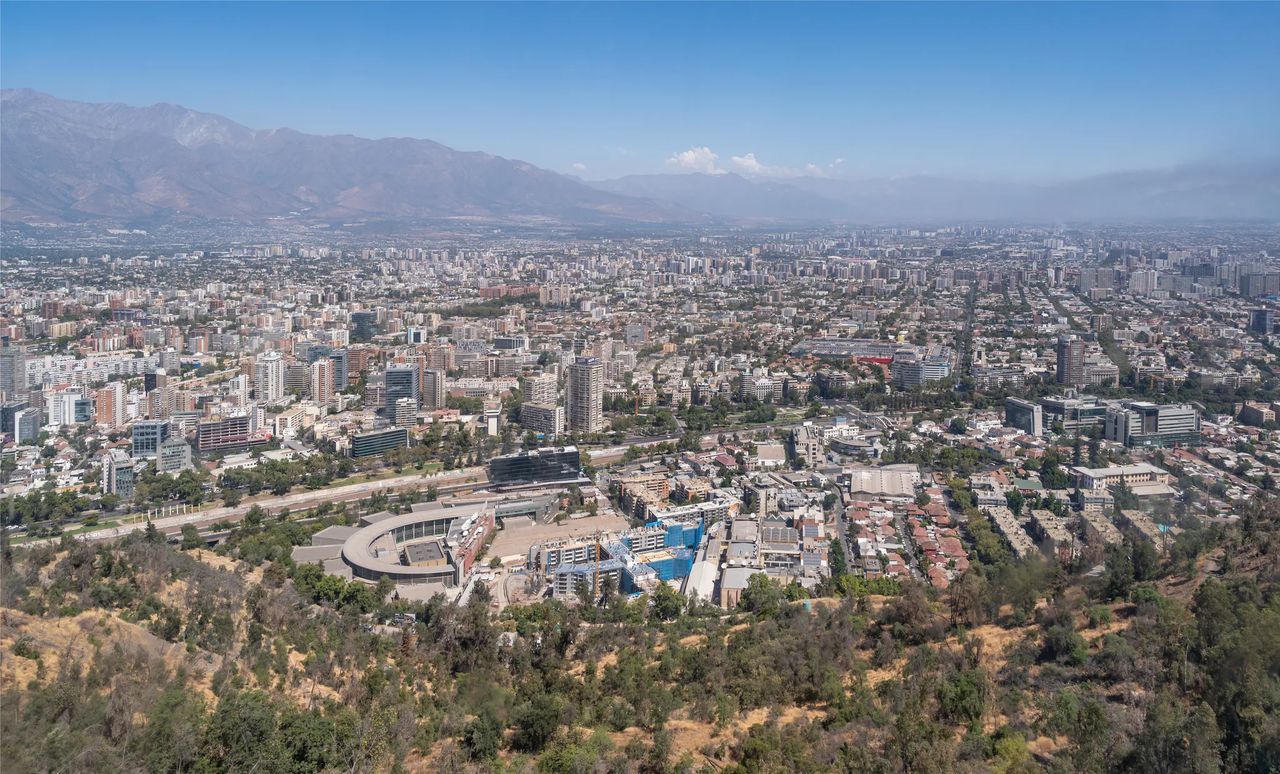
Erasmus and exchange in Santiago de Chile 2027 (26/27 · 27/28): arrival guide, neighbourhoods, paperwork and WhatsApp group
What to sort out in your first week on exchange in Santiago (SIM, Bip! card, money, student visa and ID card), where to live depending on your university, getting around safely, weekend and semester trips with prices, and the 2027 cohort WhatsApp group.
If you're heading to Santiago de Chile in 2027 as an Erasmus, exchange or study abroad student, this guide lays out what to sort out and in what order: the student visa before you fly, then in your first week the SIM card, the Bip! transport card, money and your Chilean ID card. After that comes picking a neighbourhood near your campus, getting around, and the trips almost everyone takes during the semester (Uyuni, San Pedro de Atacama, the ski season, Valparaíso). And so you don't arrive alone: the Chile 2027 WhatsApp group is already open, for the cohort arriving in March (26/27 academic year) and the one arriving in July-August (27/28).
The group is an independent community run by Tuki. It is not affiliated with the European Commission or the Erasmus+ programme. Use it to meet people before you land, swap flat leads and plan your first trips. The group page is https://tuki.cl/erasmus/grupos/chile/santiago.
You apply for the student visa from outside Chile. If you enter as a tourist, you can't switch once you're here. Everything else gets done in week one.
Your first week in Santiago: SIM, Bip!, money, visa and insurance
- Before you fly: student Residencia Temporal approved and Estampado Electrónico downloaded.
- Before you fly: health insurance with the cover your university asks for.
- Day 1: prepaid SIM with your passport (Entel, Movistar, Claro or WOM).
- Day 1: a Bip! card from any Metro station, or tap your contactless bank card on the Metro.
- Week 1: some Chilean pesos in cash for street markets, corner shops and buses if you have no Bip!
- Within 30 days of entering Chile: book an appointment at the Registro Civil for your foreigner ID card (cédula).
- If you'll use your foreign phone with a Chilean SIM: register its IMEI at multibanda.cl.
- Once you have the cédula: open a local bank account (for example CuentaRUT) if you need one.
Student visa, Estampado Electrónico and ID card
To study at a Chilean university you need a Residencia Temporal (temporary residence) in the student subcategory, and you apply from outside Chile on the National Migration Service portal (serviciomigraciones.cl). Among other things they ask for a valid passport, an apostilled criminal record certificate, your enrolment certificate or acceptance letter from the Chilean university, and proof of how you'll support yourself (scholarship, bank statements or a sponsor's affidavit). The fee depends on your nationality.
Once it's approved you download the Estampado Electrónico, which replaces the old passport stamp. According to SERMIG you then have 90 days to enter Chile. Once you're in, you have 30 days to book an appointment at the Registro Civil for your foreigner ID card (chileatiende.gob.cl walks you through it). Booking within the deadline is what counts, even if the appointment itself falls later.
About the PDI (investigations police): residence permits granted online by SERMIG since 12 February 2022 no longer need to be registered with the PDI before getting the ID card. If your visa was issued by a Chilean consulate, check pdichile.cl to see whether you still need to register it.
The part most guides skip: according to UC's migration paperwork guide, if you enter Chile on a Permanencia Transitoria (what used to be the tourist visa), you can't change to a student Residencia Temporal while you're in the country. If your exchange is one semester and someone told you a tourist entry is fine, get it confirmed in writing by your Chilean university's international office before you book flights. The rules depend on how long you stay and your nationality, so always check the official source.
SIM card and phone
You can buy a prepaid SIM with your passport at Entel, Movistar, Claro or WOM stores, and at the airport. Registering a SIM now involves an identity check (a photo of your passport plus a selfie), so bring your passport with you. If you'll use your foreign phone on a Chilean SIM for the whole semester, its IMEI has to be registered under the Multibanda/SAE rule: it's done online through one of the certified companies listed on multibanda.cl, and one registration per person per year is free at several of them. If you don't register it, the phone can get blocked from Chilean networks after a period of use.
Bip! card and paying for the Metro
The Bip! is Santiago's transport card: buy and top it up at Metro stations and Bip! points, or top it up online (red.cl, tarjetabip.cl or the Red app). Buses don't take cash. Since February 2026 the Metro and Tren Nos also accept contactless Visa and Mastercard cards, Apple Pay and Google Pay, at the adult fare. It doesn't work on buses yet. The student fare comes with the TNE (national student card), which is for residents and is handled by each institution: ask your university whether it applies to you, and use a regular Bip! in the meantime.
Money: cash, cards and a local account
Cards work almost everywhere in Santiago, but keep some cash for street markets, small shops and parties with a cash-only door. ATMs usually charge a fee for foreign cards, so take out larger amounts less often. There are exchange offices in the city centre if you bring euros or dollars. For a Chilean account, BancoEstado's CuentaRUT can be opened in the app with a valid foreigner ID card and no proof of income. No ID card, no account, so for the first weeks you'll be on your home card or a multi-currency card. One thing for later: if you go to Uyuni, the Bolivian park fees are paid in bolivianos, cash only.
Health insurance
Most universities ask for health insurance valid for your whole stay before you can register for courses. UC, for example, asks for at least USD 30,000 of medical cover, including medical and funeral repatriation. Check what your Chilean university requires and what your scholarship or home insurance already covers, and keep the policy in Spanish or English. Save the emergency numbers too: 131 ambulance (SAMU), 132 fire brigade, 133 Carabineros (police) and 134 PDI.
Where to live in Santiago, by university
Most exchange students end up in one of four areas: Providencia, Ñuñoa, Santiago Centro or Las Condes. The rule that helps most is to live near a Metro line that gets you to campus without changing twice. On price, Las Condes and Providencia tend to be the most expensive, Ñuñoa sits a bit below, and the Centro is where you'll find the cheapest rooms, although it changes a lot from one block to the next.
- Providencia: residential, on the Metro, full of cafés and bars, halfway to almost everything. Mid-to-high price.
- Ñuñoa: more of a neighbourhood feel, quiet, with squares and a cultural scene. Mid price. Good for UC San Joaquín or U. de Chile's Juan Gómez Millas campus.
- Barrio Italia (between Providencia and Ñuñoa): workshops, bars and cafés. Mid-to-high price.
- Santiago Centro (Lastarria, Bellas Artes, República): close to UC Casa Central, several U. de Chile campuses and USACH. Cheaper, but choose the street carefully.
- Las Condes: pricier and quieter. Makes sense for UDD, U. de los Andes or UAI.
Campuses and the areas that suit them
- UC Casa Central (Alameda, Universidad Católica station, Line 1): Centro, Lastarria or Providencia along Line 1.
- UC San Joaquín (Vicuña Mackenna, San Joaquín station, Line 5): Ñuñoa or anywhere near Line 5.
- U. de Chile (Casa Central, FEN and Beauchef in the Centro; Juan Gómez Millas in Ñuñoa): Centro, Providencia or Ñuñoa depending on your faculty.
- USACH (Estación Central, Universidad de Santiago station, Line 1): Centro or anywhere on Line 1.
- UAI (Peñalolén and Presidente Errázuriz in Las Condes): Las Condes or eastern Providencia. Check which campus you're at.
- UDD and U. de los Andes (San Carlos de Apoquindo, Las Condes): Las Condes. The last stretch is by bus or the university shuttle.
How to search without getting scammed: book a week or two in a hostel or a furnished flat by the night, then look in person. March is hectic because every university starts at once. Don't wire a deposit from abroad for a flat you haven't seen, ask for a contract, and check what the rent covers (building fees, internet, bills). People in the Chile 2027 group share rooms and look for flatmates from the same cohort.
Furnished flats by the night for your first weeks
Getting around and staying safe in Santiago
The Metro covers most of what you'll need, and fares change by time of day (peak, off-peak and low), so travelling outside rush hour is cheaper. With the Bip! you can combine bus and Metro for a single fare within a set time window (the rules are on red.cl). At night, ride-hailing apps (Uber, Cabify, DiDi) are the easiest option. If you hail a taxi on the street, make sure the meter is visible.
Safety: the most common problem is phone snatching on the street, at Metro exits and in busy parts of the Centro and Bellavista. Don't walk along the kerb looking at your phone, don't leave it on café tables outdoors, and wear your backpack on your front on a packed Metro. Chile is earthquake country: in a strong quake inside a modern building, the advice is to stay inside, away from windows, and follow the alerts sent to your phone. In winter there are smog alert days, and in summer the midday heat is strong.
Weekend and semester trips from Santiago
These are the trips Tuki's Erasmus community takes most, with the per-person checkout price in Chilean pesos as of September 2026 (they may change for 2027; the checkout price is the one that counts). The one nearly everyone does is Uyuni: it starts in San Pedro de Atacama, so on top of the tour you'll need the Santiago–Calama flight, the transfer to San Pedro and at least one night there. Bring your passport and check whether your nationality needs a visa for Bolivia; to re-enter Chile, carry your Estampado Electrónico or ID card too.
- Uyuni Salt Flats 4D/3N from San Pedro — CLP 270,000 — 4x4, meals and 3 nights in Bolivia. Bolivian park fees (about 300 bolivianos, cash), flights and your San Pedro night are extra.
- Altiplano Tour 5D/4N Atacama + Uyuni — CLP 345,000 — Tatio, Moon Valley and the crossing to Uyuni. Entry fees and San Pedro accommodation are extra.
- 3-day San Pedro plan — CLP 115,000 — Moon Valley, Piedras Rojas and the Tatio geysers. Entry fees and accommodation are extra.
- Snow Full Pack + Transport — CLP 84,900 (seasonal promo) — return bus from Santiago, skis or board, boots, trousers, gloves, goggles and helmet. Lift pass and jacket are extra.
- Viña del Mar and Valparaíso — CLP 45,000 — full day with transport, guide and a wine tasting in Casablanca. Lunch is extra.
- Cajón del Maipo — CLP 65,000 — Salto del Yeso, Las Melosas and lunch, with transport from Santiago.
- Torres del Paine Full Day — CLP 90,000 — from Punta Arenas, with guide and transfer. Park fees and food are extra.
Uyuni and San Pedro de Atacama (a free week or a long weekend)
Experiencia: tour-salar-de-uyuni-4d3n-desde-san-pedro-de-ata-1 — Desde $270.000
Experiencia: tour-altiplanico-atacama-uyuni-1 — Desde $345.000
Experiencia: plan-ideal-3-dias-luna-piedras-rojas-y-tatio — Desde $115.000
The mirror effect on the salt flats, access to Incahuasi Island and the night in the salt hostel all depend on the state of the salar that week: no operator can guarantee them. The Uyuni guide has the details on dates and what's extra.
Uyuni salt flats tours: options and prices
Ski season (roughly June to September)
The ski resorts are a few hours from Santiago and the season usually runs from June to September, depending on the snow. Arrive in March and it falls at the end of your semester; arrive in July-August and it's right at the start. The pack with transport covers the bus and the gear in one payment. The lift pass is bought separately at the resort.
Experiencia: pack-full-transporte-equipo-de-nieve — Desde $84.900
Snow day trips from Santiago: prices
Day trips: coast and mountains
Experiencia: vina-del-mar-y-valparaiso — Desde $45.000
Experiencia: cajon-del-maipo-salto-del-yeso-baco — Desde $65.000
Patagonia (for the long break or the end of the semester)
Torres del Paine means a flight to Punta Arenas or Puerto Natales. If you're short on days, the full day from Punta Arenas covers the park's main viewpoints and the Milodón Cave in one long day. Bring food and budget for the park fees, which are paid separately.
Experiencia: full-day-torres-del-paine — Desde $90.000
Parties and the Erasmus community in Santiago
Tuki's Erasmus community started in Santiago, in a WhatsApp group. During the semester there's something on most weeks: parties, barbecues (asados), pool parties, hikes near the city, salsa and bachata, climbing, and group trips to Uyuni, San Pedro or the snow. Dates aren't fixed: each activity is posted on tuki.cl/erasmus and announced in the group, and you sign up by reacting to the message. If you register on tuki.cl/erasmus, you'll get your cohort's activities.
Join the Chile 2027 group
If you already have your acceptance letter, join the group now: the people arriving with you are already looking for flats and planning trips before they land. It's an independent community run by Tuki, not affiliated with the European Commission or Erasmus+. Everything is on https://tuki.cl/erasmus/grupos/chile/santiago.
Frequently asked questions
Is there a WhatsApp group for Erasmus students in Santiago de Chile in 2027?
Yes. Tuki's Chile 2027 group brings together Erasmus, exchange and study abroad students arriving in Santiago in March 2027 (26/27 academic year) or July-August (27/28). You join from https://tuki.cl/erasmus/grupos/chile/santiago. It's an independent community run by Tuki, not affiliated with the European Commission or Erasmus+.
What do I need to do when I arrive in Santiago on exchange?
In week one: buy a prepaid SIM with your passport, get a Bip! card (or tap a contactless bank card on the Metro), have some pesos in cash and, within 30 days of entering Chile, book an appointment at the Registro Civil for your foreigner ID card. If you'll use your foreign phone with a Chilean SIM, register its IMEI at multibanda.cl.
Can I do an exchange in Chile on a tourist visa?
To study at a Chilean university you need the student Residencia Temporal, applied for from outside Chile at serviciomigraciones.cl. If you enter as a tourist (Permanencia Transitoria), you can't switch to a student residence inside the country. If you're told a tourist entry is enough for a short semester, get it confirmed in writing by your Chilean university's international office before you travel.
Do I have to register with the PDI?
If your residence was granted online by SERMIG since 12 February 2022, generally not: you go straight to the Registro Civil for your ID card. If your visa was issued by a Chilean consulate, check pdichile.cl to see whether you need to register it first.
Where do exchange students live in Santiago?
Mostly in Providencia, Ñuñoa, Santiago Centro and Las Condes. Pick by campus: Centro or Providencia for UC Casa Central, U. de Chile and USACH; Ñuñoa for UC San Joaquín and U. de Chile's Juan Gómez Millas; Las Condes for UDD, U. de los Andes and UAI. Book somewhere temporary for the first weeks and view flats in person.
Can I get the student fare (TNE) on the Metro as a foreigner?
The TNE is for residents and each institution handles it, so it depends on your situation and your university: ask the international office. In the meantime use a regular Bip! or tap your contactless bank card on the Metro, which charges the adult fare and doesn't work on buses yet.
How much does it cost to go to the Uyuni salt flats from Santiago?
The 4-day, 3-night tour from San Pedro de Atacama is CLP 270,000 per person on Tuki (September 2026; the checkout price is the one that counts) and includes the 4x4, meals and 3 nights in Bolivia. On top of that you pay the Santiago–Calama flight, the transfer to San Pedro, at least one night in San Pedro and the Bolivian park fees (about 300 bolivianos, cash).
What trips can I do during an exchange semester in Chile?
The usual ones are Uyuni and San Pedro de Atacama in a free week, the ski season between June and September, Valparaíso and Viña del Mar or the Cajón del Maipo as day trips, and Patagonia (Torres del Paine) during the long break or after the semester. Group trips for the cohort are organised in the Chile 2027 group.