Erasmus in Buenos Aires 2027: arrival guide, neighbourhoods, money and WhatsApp group
A practical guide for Erasmus, exchange and study abroad students arriving in Buenos Aires in 2027 (March, 26/27, or August, 27/28): SIM, how to pay without changing money on the street, the SUBE card, student residence, insurance, neighbourhoods by university, semester trips and the cohort WhatsApp group.
If you're heading to Buenos Aires on Erasmus, an exchange or a study abroad programme in 2027, your first week comes down to five things: a local SIM, a way to pay that doesn't depend on changing money on the street, a registered SUBE transport card, your student residence application with Migraciones, and valid health insurance. For everything else (flats, people, nights out and trips) there's the 2027 cohort WhatsApp group: one group for both the March intake (26/27 academic year) and the August intake (27/28). It's free and run by Tuki.
Erasmus & Exchange Buenos Aires 2027
Independent community run by Tuki. Not affiliated with the European Commission or the Erasmus+ programme. The group page is https://tuki.cl/erasmus/grupos/argentina/buenos-aires.
First week: SIM, registered SUBE, a way to pay that isn't the street exchange, and your Migraciones appointment requested. The long-term flat can wait, and never pay for one you haven't seen.
First week in Buenos Aires: SIM, money, SUBE, residence and insurance
- Prepaid SIM or eSIM active (bring your passport).
- A Visa/Mastercard debit or credit card that works abroad, plus a backup way to get pesos.
- Some emergency cash in dollars or euros, in notes in good condition.
- SUBE card bought and registered.
- Student residence application started (or confirmed with your university if they handle it).
- Health insurance valid for the whole semester, trips included.
- The exact campus you'll attend, before you sign any rental.
SIM or eSIM
There are three carriers: Claro, Movistar and Personal. Prepaid SIMs are sold in official stores, at kiosks and at Ezeiza airport, and you need your passport to activate one. If your phone supports eSIM, a travel eSIM covers the first few days while you sort out a local number. In Argentina almost everything runs on WhatsApp (landlords, your university, appointments), so a local number early on saves hassle.
Money and payments: cards, transfers and cash
Argentina has several exchange rates at once and the rules change often, so don't rely on a figure from a blog: check on the day you arrive. What stays the same is the set of options.
Cards: Visa and Mastercard are accepted almost everywhere; American Express much less so. Before you travel, ask your bank which exchange rate and fee it applies per purchase, because banks differ a lot.
International transfers: many exchange students send money to themselves through services like Western Union and collect pesos at a branch with their passport. Compare the rate you're offered with your card's before deciding.
Cash: bring an emergency reserve in dollars or euros and change it at banks or licensed exchange offices, not with the street changers on Florida Street (the risk is fake notes). ATMs charge high fixed fees on foreign cards and give out small amounts per withdrawal, so treat them as a last resort.
Wallets and QR codes: locals pay for almost everything by QR (Mercado Pago and others), but opening an account usually requires an Argentine ID, which you only get with residence. At first you'll rely on your card and cash. Some places charge a different price for cash or bank transfer, so ask before paying.
The SUBE card
SUBE is the public transport card for buses (colectivos), the subway (subte), trains and the Premetro. You can buy one at kiosks, subte and train stations and post offices without showing ID. Register it on day one at argentina.gob.ar/sube: in the metropolitan area (AMBA), unregistered cards pay noticeably more per ride, and a registered card lets you recover your balance if you lose it. A registered SUBE also gets you Red SUBE, the discount for connecting rides within two hours. If you can't create the account online as a foreigner, take your passport to a SUBE service centre (there are ones in Retiro and Constitución, among others). You can also tap a contactless Visa or Mastercard or your phone on the subte and on buses, which is handy for the first days before you have a SUBE.
Student residence or entry permit
The agency in charge is the Dirección Nacional de Migraciones. There are two main routes for students, and which one applies depends on your programme, so ask your host university's international office before you travel.
Temporary student residence (residencia transitoria): valid for up to 365 days and extendable. You start it online on the RaDEX platform (create a user, fill in the form, pay the fee and upload documents) and then get an email with an in-person appointment. It usually requires a valid passport, the electronic enrolment certificate issued by your university, an Argentine criminal record certificate (16 and over) plus one from any country where you lived more than a year in the last three, proof of address and proof of regular entry into the country. Foreign documents must be legalised or apostilled and translated by a certified public translator.
Entry permit for international mobility students: designed for non-degree programmes such as an exchange. Your host institution applies before you arrive, and with that approval you get the visa at an Argentine consulate.
Many passports can enter Argentina visa-free as tourists, but studying for a semester is not the same as a holiday: check with your university which procedure you need and by when. Fees and requirements change, so the final word is on argentina.gob.ar/migraciones.
Health insurance
Since Decree 366/2025, anyone entering Argentina must declare that they have health insurance to cover medical costs. Foreigners who aren't permanent residents have to show that insurance or pay upfront for non-emergency care at national public hospitals; emergencies are always treated. In practice, your insurance is how you access healthcare, and many universities also require it for enrolment. Pick one that covers the whole semester and your trips too: if you're planning Uyuni or Patagonia, check it covers altitude, trekking and neighbouring countries.
Where to live in Buenos Aires, by university
The rule that helps most: live one direct ride (a single subte line, train or bus) from the campus where you'll actually study, not from the university in general, because several have campuses in different neighbourhoods or outside the city. The usual options are a room in a shared flat, a student residence or a furnished short-term rental (alquiler temporario). Don't pay a deposit or first month for a flat you haven't seen in person, or on a video call with someone you trust: fake listings are the most common problem students run into. The cohort group is where people share flats, team up as flatmates and flag suspicious listings.
- Palermo: the most popular area with international students. Lots of short-term rentals, bars, parks (the Bosques de Palermo) and subte line D. One of the pricier options on this list.
- Recoleta: residential and well connected (lines D and H). Close to the UBA Law School and a few blocks from the Economics faculty on Av. Córdoba.
- Belgrano: quieter and more family-oriented. Good for Di Tella, for UBA's Ciudad Universitaria in Núñez, and for the Mitre train north (UdeSA).
- San Telmo: historic, with a Sunday market and somewhat lower prices. Close to Puerto Madero (UCA, ITBA). Take more care at night.
- Almagro and Villa Crespo: residential areas with lower rents than Palermo, a neighbourhood feel and good links on subte lines A and B.
- UBA: faculties are spread across the city. Law is in Recoleta; Economics at Av. Córdoba 2122; Sciences and Architecture at Ciudad Universitaria (Núñez). Confirm your faculty before choosing an area.
- Universidad de San Andrés (UdeSA): the main campus is in Victoria, in the northern suburbs of Greater Buenos Aires. Take the Mitre train to Victoria station, where a free university shuttle runs on weekdays. Belgrano, Núñez or the northern suburbs shorten the commute.
- Universidad Torcuato Di Tella: campus in Belgrano. Belgrano, Núñez and Palermo are all close.
- UCA: campus in Puerto Madero (Av. Alicia Moreau de Justo). San Telmo, Monserrat and Recoleta are nearby options.
- Universidad Austral: the main campus is in Pilar, an hour or more from the city depending on traffic. Some programmes are taught in the city, so confirm where your classes are.
- ITBA: campuses in Parque Patricios (the tech district, subte line H) and Puerto Madero. Line H gets you there from Recoleta or Once.
Getting around Buenos Aires and staying safe
Arriving: almost all international flights land at Ezeiza (EZE), about 30 km south of the centre. Aeroparque (AEP) sits next to Palermo and handles domestic and regional flights, so most flights to Iguazú or Patagonia leave from there. From Ezeiza you have three options: an official taxi or remís booked inside the terminal, a private shuttle bus to a terminal in the centre, or bus line 8 (cheap and slow, you need a SUBE). Ride-hailing apps work and are widely used.
In the city: the subte has six lines (A, B, C, D, E and H) plus the Premetro. Buses reach everywhere and several lines run all night. Trains (Mitre, Sarmiento and others) connect with Greater Buenos Aires. Everything is paid with SUBE or a contactless card.
Safety: Buenos Aires is a big city and works like one. The most common problem for students is phone snatching on the pavement, at subte entrances or through a bus window, rather than violent situations. At night, the areas around the big stations (Constitución, Retiro, Once) and an empty Microcentro call for more attention, and in La Boca it's best to stay in the tourist area around Caminito.
- Don't use your phone on the pavement or at subte entrances; step into a shop if you need the map.
- At night, use a ride-hailing app or a taxi booked through an app, not one hailed on the street.
- Change money only at banks or licensed exchange offices, not on Florida Street.
- When paying cash, count your change and check the notes.
- Carry a copy or photo of your passport and leave the original at home, except for paperwork.
- Share your location with someone from the group when you go out at night or travel alone.
Trips from Buenos Aires: Iguazú, Uyuni, Atacama and Patagonia
A semester gives you several long weekends and one or two big trips. Tuki's Argentine offer is short for now: the Iguazú Falls full day and an asado in Palermo. The semester trips the community books most (Uyuni, San Pedro de Atacama and Torres del Paine) run on the Chilean and Bolivian side, and from Buenos Aires you get there by plane (via Santiago or via El Calafate) or by bus through northern Argentina. All prices are per person, in Chilean pesos (CLP), as shown at Tuki's checkout on 29 September 2026. The checkout charges in CLP; prices are seasonal and can change, and the checkout is the source of truth.
In the city: an asado in Palermo
For a first night out with people from the group: the Asado La Terracita in Palermo Soho lasts about two and a half hours, with a six-course menu (Tucumán-style empanada, morcilla, choripán, matambre and grilled cuts) and a tasting of three Mendoza wines. It costs CLP $72,114 per person. The price is converted from a foreign currency, so it moves with the exchange rate. Transfers are not included, and you book it through WhatsApp.
Experiencia: asado-la-terracita — Desde $73.684
Iguazú Falls
The classic long-weekend trip from Buenos Aires. You can fly from Aeroparque to Puerto Iguazú or take an overnight bus (a long ride, close to a full day). Tuki's full day covers both the Argentine and Brazilian sides in about ten hours, with pickup from your hotel in Puerto Iguazú or Foz do Iguaçu, and costs CLP $42,000 per person. Not included: entry to both national parks, lunch, the boat ride under the falls and airport transfers. You need your passport to cross into Brazil. In 2026 the Devil's Throat (Garganta del Diablo) walkway was closed because of river floods, so check its status before you go.
Experiencia: cataratas-del-iguazu-tour-de-dia-completo-por-l — Desde $42.000
Uyuni Salt Flats via northern Argentina
The overland route from Buenos Aires goes up to Salta or Jujuy, crosses into Bolivia at La Quiaca–Villazón and continues by bus or train to Uyuni. If you arrive that way, the Uyuni Salt Flats full day leaves from Uyuni town, with pickup at the airport or bus terminal, and costs CLP $39,422 per person. The price is converted from a foreign currency, so it moves with the exchange rate. Not included: entry to Incahuasi Island (30 bolivianos) and rubber boots if the salt flat is flooded. Check whether your passport needs a visa for Bolivia.
Experiencia: tour-salar-de-uyuni-full-day-atardecer-y-espejo — Desde $40.281
Uyuni and Atacama from San Pedro de Atacama
One of the trips exchange students book most on Tuki. You reach San Pedro de Atacama by flying to Calama (via Santiago) or by bus from Salta or Jujuy over the Jama Pass. The 4-day/3-night Uyuni Salt Flats tour starts and ends in San Pedro and costs CLP $270,000 per person. The 6-day Altiplano tour adds Atacama tours to the salt flats and costs CLP $395,000. On both, Bolivian park fees (about 300 bolivianos, cash only), flights and the transfer to San Pedro are extra; on the 6-day tour, so are the Atacama park fees and your nights in San Pedro (details on each listing).
Experiencia: tour-salar-de-uyuni-4d3n-desde-san-pedro-de-ata-1 — Desde $270.000
Experiencia: tour-altiplanico-6d5n-san-pedro-uyuni-ventura — Desde $395.000
If you're only going to San Pedro, the 3-day plan combines Moon Valley, Piedras Rojas and the El Tatio geysers for CLP $115,000 per person. Park fees and accommodation are extra.
Experiencia: plan-ideal-3-dias-luna-piedras-rojas-y-tatio — Desde $115.000
Chilean Patagonia: Torres del Paine
From Buenos Aires there are two ways in: fly to El Calafate and cross by bus to Puerto Natales, or fly via Santiago to Punta Arenas and take a bus for about three hours. The park's main season runs from October to April, so the March intake catches autumn and the August intake gets spring. The panoramic full day from Puerto Natales costs CLP $60,000 per person. The 3-day/2-night W Circuit costs CLP $1,300,000. On both, the park entrance fee is extra; on the full day, so are meals and entry to the Milodón Cave.
Experiencia: puerto-natales-tour-de-dia-completo-a-torres-de — Desde $60.000
Experiencia: torres-del-paine-senderismo-w — Desde $1.300.000
Uyuni Salt Flats tours: options and prices
Atacama + Uyuni in 5 or 6 days, day by day
Torres del Paine tours from Puerto Natales: prices
Erasmus and exchange community in Buenos Aires 2027
The Erasmus & Exchange Buenos Aires 2027 group brings together Erasmus, exchange and study abroad students arriving in the city in March (26/27) or August (27/28). People use it to find flats or flatmates, sort out Migraciones and SUBE questions, plan nights out and organise trips. New members go through approval, and numbers reported for spam are blocked across the whole community. If you're heading to another Argentine city, the Argentina 2027 group is at https://tuki.cl/erasmus/grupos/argentina. To hear about Tuki's group trips and activities, sign up at tuki.cl/erasmus.
Independent community run by Tuki. Not affiliated with the European Commission or the Erasmus+ programme.
See the Buenos Aires 2027 group
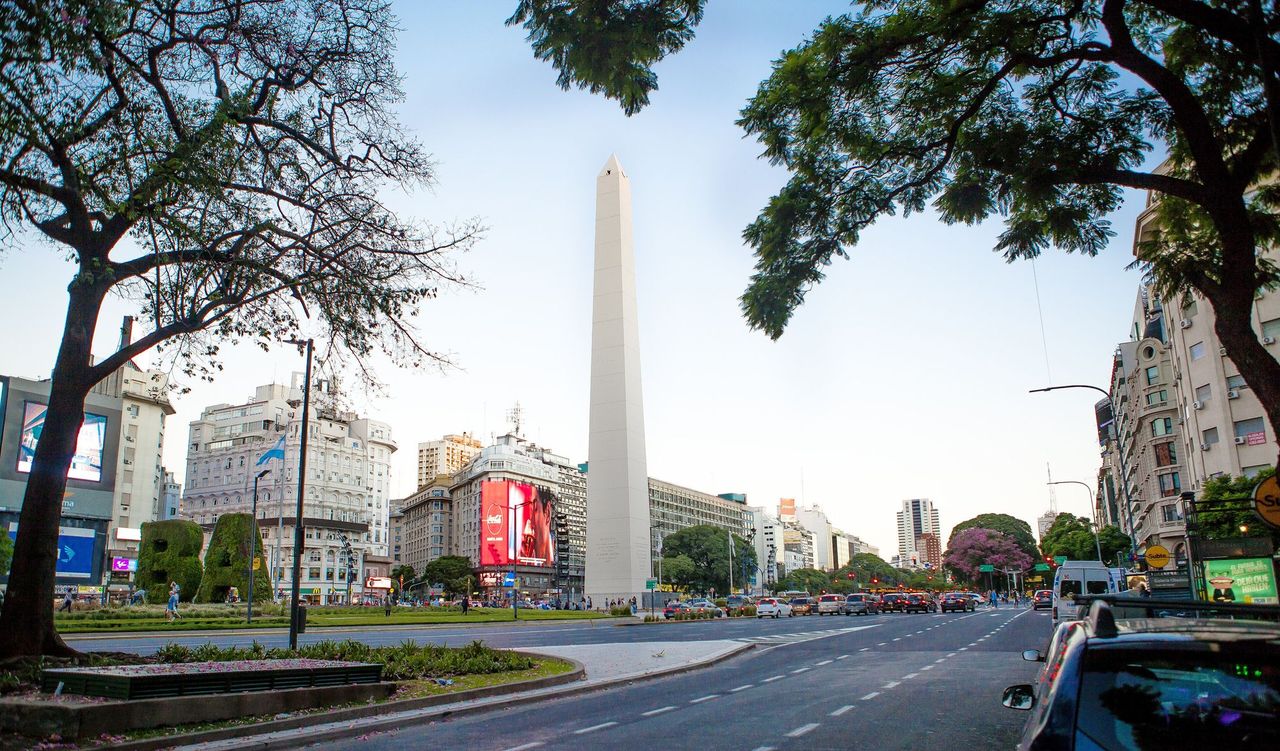
Cover photo: leonardo samrani from rosario, argentina / Wikimedia Commons, CC BY 2.0.
Erasmus & Exchange Buenos Aires 2027
Frequently asked questions
Is there a WhatsApp group for Erasmus and exchange students in Buenos Aires in 2027?
Yes. Erasmus & Exchange Buenos Aires 2027 is the cohort group for Erasmus, exchange and study abroad students arriving in Buenos Aires in 2027. It's free, run by Tuki, and you join from https://tuki.cl/erasmus/grupos/argentina/buenos-aires. New members go through approval to keep spam out.
I arrive in March (26/27) or August (27/28): which group should I join?
The same one. The 2027 group covers both intakes of the year: March arrivals, in the second semester of the 26/27 academic year, and August arrivals, at the start of 27/28.
What visa or residence do I need to study a semester in Buenos Aires?
It depends on your programme. The two usual routes with Migraciones are the temporary student residence (up to 365 days, extendable, started online on RaDEX and finished at an in-person appointment) and the entry permit for international mobility students, which your host university requests before you arrive. Ask your university's international office which one applies, and check requirements and fees on argentina.gob.ar/migraciones.
How should I handle money in Argentina as an exchange student?
Combine options: a Visa or Mastercard for paying in shops, an international transfer service like Western Union to collect pesos at a branch, and an emergency cash reserve in dollars or euros. Exchange rates change often, so compare on the day you need money. Only change cash at banks or licensed exchange offices, never on the street.
Which neighbourhoods do exchange students live in in Buenos Aires?
The most popular are Palermo, Recoleta and Belgrano; San Telmo, Almagro and Villa Crespo are cheaper. What matters most is your campus: UdeSA is in Victoria and Austral in Pilar, both outside the city; UCA is in Puerto Madero; Di Tella in Belgrano; ITBA in Parque Patricios and Puerto Madero; and UBA has faculties across the city.
Do I need health insurance to study in Argentina?
Yes. Since Decree 366/2025, anyone entering the country must declare health insurance, and foreigners who aren't permanent residents must show it or pay upfront for non-emergency care at national public hospitals. Emergencies are always treated. Many universities require it too. Choose a policy that covers the whole semester and trips to neighbouring countries.
What trips can I do from Buenos Aires during the semester?
The most common are Iguazú Falls (full day on Tuki for CLP $42,000, park fees extra), the Uyuni Salt Flats (4 days/3 nights from San Pedro de Atacama for CLP $270,000, or a full day from Uyuni), San Pedro de Atacama (3-day plan for CLP $115,000) and Torres del Paine (full day from Puerto Natales for CLP $60,000). Prices are from the checkout on 29 Sep 2026, in Chilean pesos, and can change: the checkout is the source of truth.
Is the group part of the Erasmus+ programme?
No. It's an independent community run by Tuki (tuki.cl), not affiliated with the European Commission or the Erasmus+ programme. It's called Erasmus because that's how many students search for it, but it's open to any exchange or study abroad student.